
In the immediate aftermath of a road accident, your instinct may be to exchange details and drive away as quickly as possible. But what you do — and what you document — in those first critical minutes can be the difference between a successful compensation claim and having your case dismissed.
Insurers have entire teams dedicated to challenging claims. The more contemporaneous evidence you have, the harder it is for them to dispute your version of events.
Step 1: Secure the Scene — Safety First
Before anything else, ensure you are safe. If the vehicles are driveable, move them to the side of the road if it is safe to do so. Turn on hazard lights. Check for injuries to yourself, passengers, and other parties. Call 999 if anyone is injured or the road is blocked.
Only once you are safe should you begin gathering evidence.
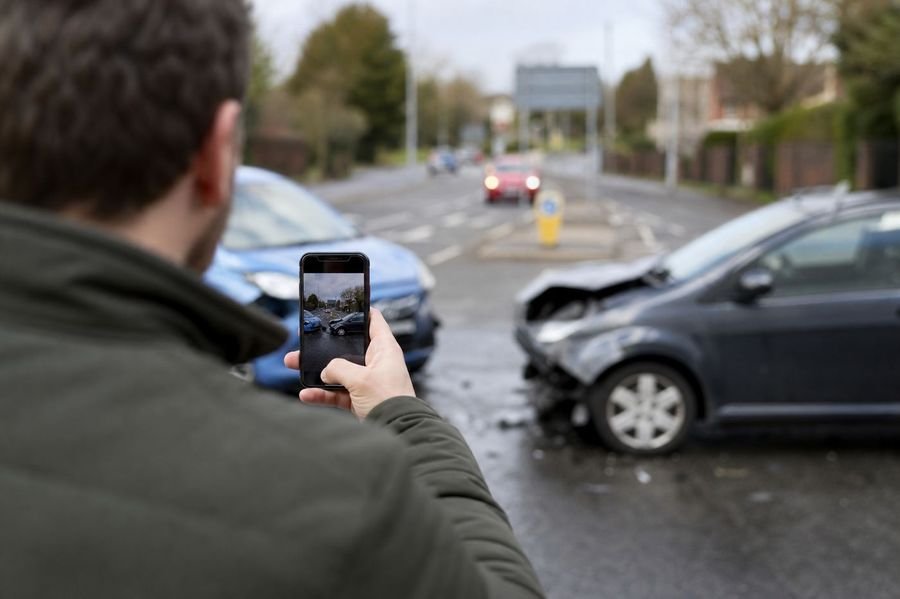
Step 2: Photograph Everything
Your smartphone is your most powerful evidence-gathering tool. Take photos of:
- All vehicles involved — from multiple angles, showing damage clearly
- The positions of vehicles — before they are moved, if possible
- Skid marks, debris, and road markings
- Traffic lights, road signs, and junctions relevant to the collision
- Weather and road conditions — wet surface, ice, poor visibility
- Number plates of all vehicles involved
- Any visible injuries to yourself or passengers
- Wide-angle shots showing the general scene and surroundings
Take more photos than you think you need. Storage is free. Regret isn't.
Step 3: Get the Other Driver's Details
You are legally entitled — and required — to exchange details at the scene. Collect:
- Full name and home address
- Vehicle registration number
- Insurance company name and policy number
- Contact phone number
If the other driver refuses to provide their details, note their registration number and call the police immediately (101). Refusing to exchange details is a criminal offence under the Road Traffic Act 1988.
Step 4: Secure Your Dashcam Footage — Immediately
If you have a dashcam, this is your single most valuable piece of evidence. Remove and preserve the SD card as soon as you arrive home. Many dashcams automatically overwrite footage on a loop — if you don't save it, it will be lost within hours or days.
Dashcam Footage That Changed Everything
In one SafeClaim case, a driver's insurer initially accepted 50% liability based on the other driver's account. When dashcam footage was retrieved and reviewed, it showed clearly that the other vehicle had jumped a red light. Liability was shifted to 100% — and the final settlement tripled.
Step 5: Speak to Witnesses
Independent witnesses can be decisive in disputed liability cases. If anyone stopped to watch, or was at the roadside:
- Ask if they saw what happened
- If yes, ask for their name and phone number
- Don't pressure them — simply ask politely
Even a brief written note about what a witness told you at the scene can be valuable if they later become difficult to contact.
Step 6: Report to the Police if Necessary
You must report the accident to the police within 24 hours if:
- Anyone was injured
- The other driver failed to stop or provide details
- There was damage to property other than the vehicles involved (e.g., a wall, lamp post)
Even if none of these apply, obtaining a police reference number adds credibility to your claim.
Step 7: Seek Medical Attention — Even for Minor Injuries
This is one of the most commonly overlooked steps. If you feel any pain — even mild stiffness, a headache, or neck discomfort — see your GP or visit A&E within 24 hours. A contemporaneous medical record linking your symptoms to the accident date is crucial evidence.
Do not say "I'm fine" at the scene and then seek treatment two weeks later. Insurers will use the gap against you to argue your injuries were caused by something else.
Step 8: Write a Detailed Account
Memory fades fast. Within a few hours of the accident, write down:
- The exact sequence of events leading up to the collision
- The speed and direction of each vehicle
- What the other driver said at the scene
- Your physical symptoms and how you felt
- The date, time, and exact location
This written account, timestamped on your phone, can be used to refresh your memory and support your solicitor months down the line.
What If You Didn't Collect Evidence at the Scene?
Don't panic. Many successful claims are built without comprehensive scene evidence. Your solicitor can:
- Request CCTV footage from local councils and businesses (act quickly — footage is deleted)
- Obtain the police accident report
- Commission accident reconstruction experts
- Access medical records to establish the timeline of your injuries
The sooner you instruct a specialist, the more of this secondary evidence can be preserved.